
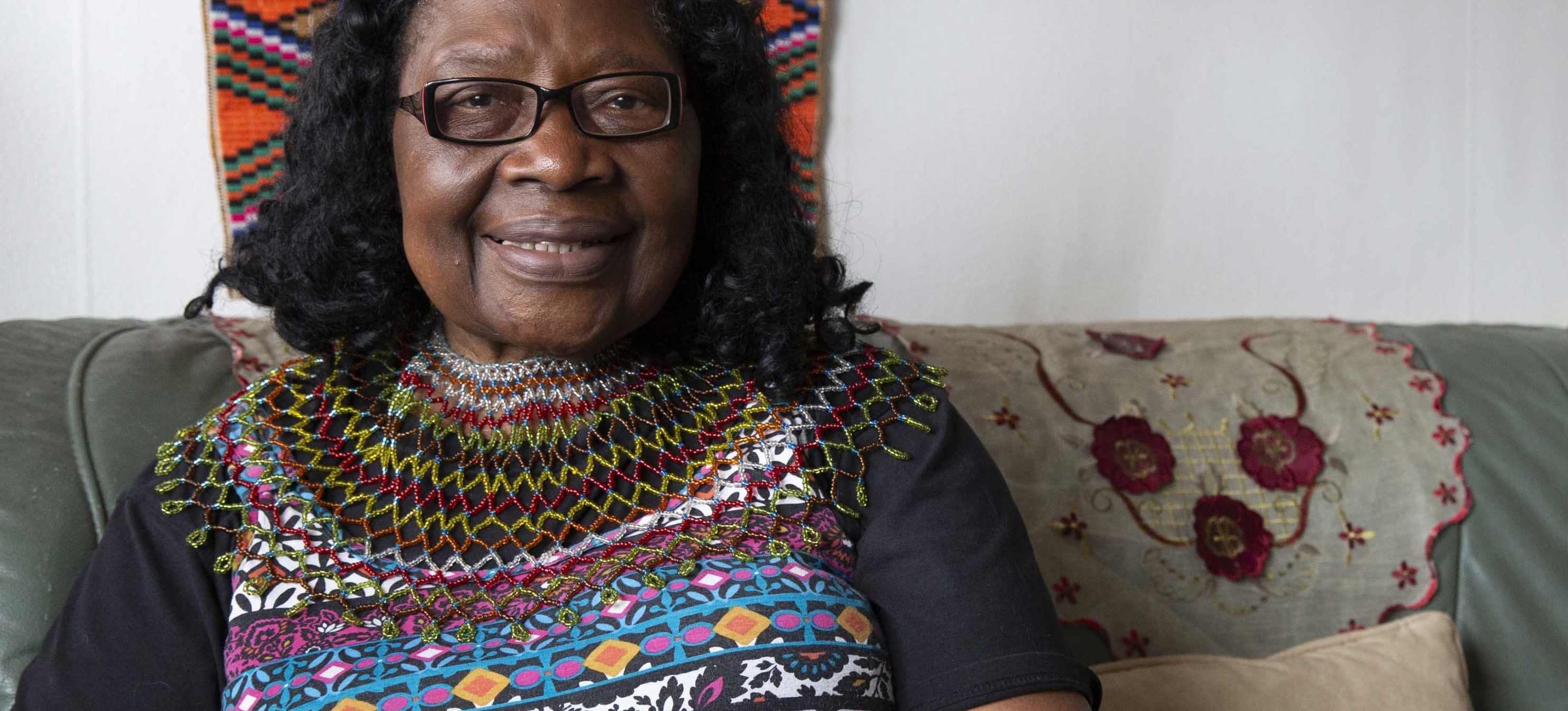
‘Living alone with dementia is the next major challenge in aging.’ Mike Splaine, Splaine Consulting
I think many people assume it’s impossible to live alone if you have dementia. This is just one of many public misconceptions about living with dementia. Having supported from a distance two family members who each lived alone with dementia, I was aware that it does happen – and that services and support are generally designed around the expectation that there is a family carer involved and available. That’s why, when I led the IDEAL (Improving the experience of Dementia and Enhancing Active Life) study, I wanted to know how many of the people we recruited through NHS memory services were living alone and to learn more about their experiences.
Nearly 1 in 5 IDEAL participants were living alone with mild or moderate dementia, and of those living alone, nearly 1 in 5 said they had little or no informal support. Compared to people living with others, on average they had lower well-being and poorer quality of life, a difference that remained evident over two years of follow up (read our 2025 paper). We thought 1 in 5 might be underestimating the proportion who live alone because family carers are often instrumental in supporting participation in research studies like IDEAL.
I was still keen to find out more, so when we set up DeNPRU Exeter I proposed living alone with dementia as a policy research topic. Using data from primary care, we found that 40%, or 2 in 5, of people with dementia living in the community in England in 2023 were living alone (read our 2025 paper). Looking at research evidence (see our newly published 2025 review), we came to understand this as a source of inequality, as people living alone – often older women – have more unmet needs, appear to experience disadvantage across the care pathway from diagnosis to end-of-life, and have a distinct experience of life with the condition. Despite this, there is scarcely any research evidence about how best to support those living alone.
Through working on this topic our team was able to connect with colleagues with a similar interest:
- Dementia UK identified living alone with dementia as one of its research priorities and we worked in parallel with Emma Wolverson and Karen Harrison-Dening and their team.
- Paola Barbarino, CEO of Alzheimer’s Disease International (ADI), told me that addressing the needs of people living alone with dementia is a global concern and not just an issue for high-income countries, and living alone will be a key theme in the next ADI conference in April 2026.
- In November, I joined my US colleagues, including Heather Menne and Allison Gibson, in delivering a symposium on this topic at the Gerontological Society of America conference in Boston and we held stimulating discussions with others working in this area including Elena Portacolone and Fang Yu.
- Next year, we plan to present at the International Association of Gerontology and Geriatrics conference in Amsterdam in July.
All this tells me there is a groundswell of interest and real momentum for change. Here in England, our policy report had an immediate impact in the new NHS Dementia 100 Pathway Assessment Tool, commissioners are now advised to consider the needs of people living alone with dementia when planning and commissioning services. This is a good start. Now we must build on it.
When we embarked on this policy research project, I was shocked to discover that 30 years ago, in 1994, the (then) Alzheimer’s Disease Society had issued a policy report on ‘Dementia and Living Alone’ that emphasised the need for tailored services and better support, yet in 2024 it seemed awareness of the issue remained limited. I’m encouraged to see this starting to change. We cannot leave it another 30 years – change needs to happen now.
Sign up to our monthly newsletter to hear the latest updates, upcoming events and opportunities from DeNPRU Exeter.
By Prof Linda Clare, Director of DeNPRU Exeter